
THE HISTORY OF REFORMER
The Origins: Joseph Pilates and Contrology
Contrary to popular belief, Reformer pilates wasn’t introduced by fitness-loving millennials. “The Reformer” was actually invented in the early 20th century by Joseph Pilates (no coincidence btw), a German physical trainer born in 1883. After suffering from asthma and rickets as a child, Joseph Pilates became fascinated by anatomy and physical conditioning. He studied gymnastics, boxing, yoga, martial arts, you name it… developing his own training method called Contrology (the art of controlled movement).
During World War I, Joseph Pilates began experimenting with springs attached to hospital beds. He used them to help injured soldiers exercise while lying down, encouraging strength and mobility. That spring-based resistance system became the blueprint for what we now know as the Reformer bed.
The Birth of the Pilates Studio
In the 1920s, Joseph Pilates moved to New York and opened up the first pilates studio. Conveniently located near several dance studios, it quickly became popular with dancers recovering from injury. The Reformer bed was central to his method, designed to:
Improve core strength
Enhance flexibility
Build long, lean muscle
Support rehabilitation
Unlike traditional weight training, the Reformer bed uses spring resistance and a moving carriage to create smooth, controlled resistance throughout the entire range of motion. It was revolutionary then, and it still is today.
THE MOVE to mainstream Fitness
For decades, Pilates remained something of a well-kept secret among dancers, athletes and physiotherapists. It wasn’t until the 1990s and early 2000s that Reformer Pilates entered the mainstream fitness world. Its sleek design, visible springs and smooth-gliding carriage made it both aesthetically striking and highly effective - the perfect combination for a new generation of fitness fanatics .
The 1REBEL Reformer Experience
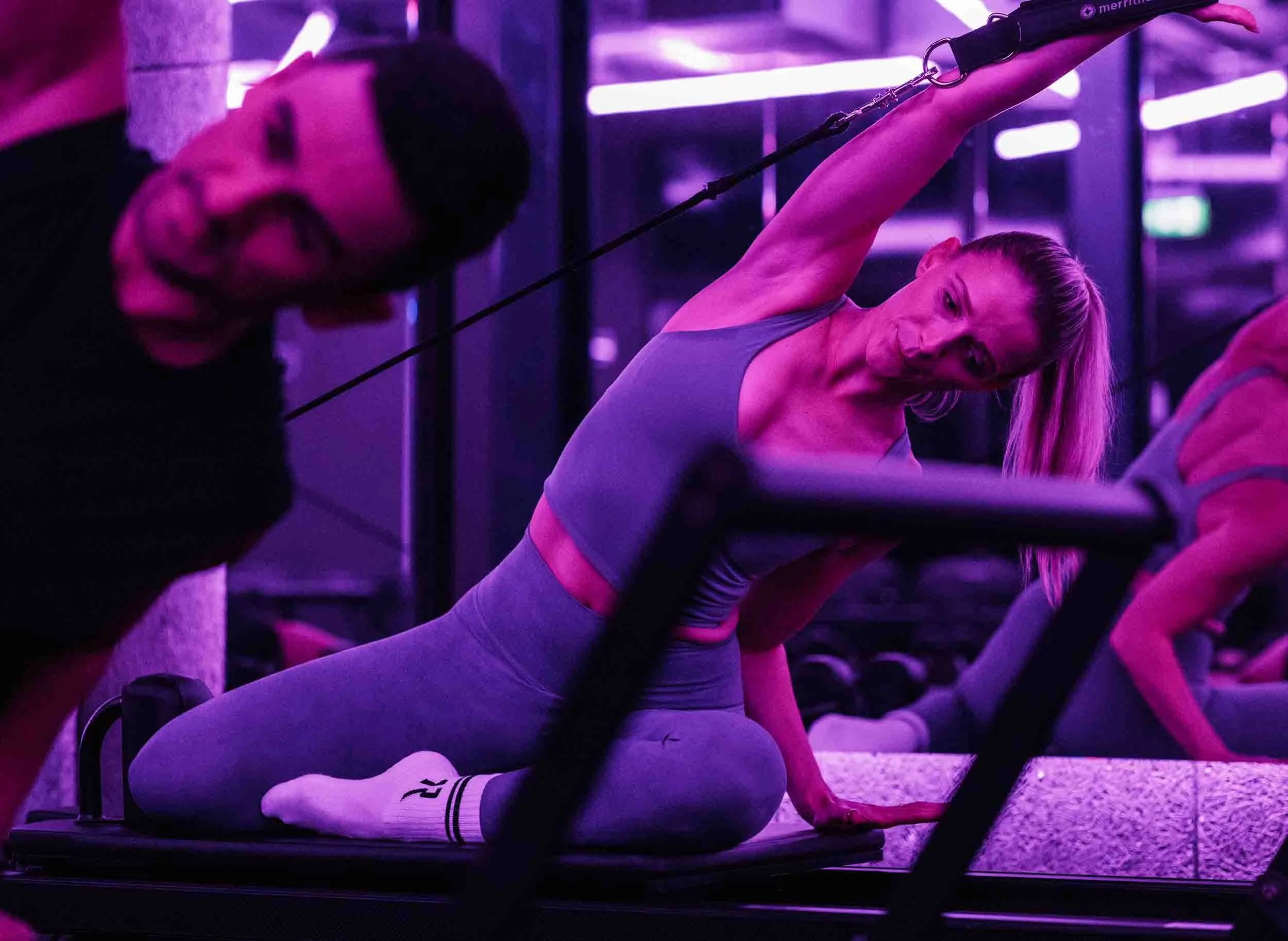
Today, Reformer has evolved far beyond its rehab roots. At 1Rebel, we’ve reimagined it as a high-energy, music-driven, immersive group experience.
At its core, the principle remains exactly as Joseph Pilates intended:
STRENGTH: Build full body and core strength from spending time under tension, focusing on individual muscles to create that all important burn.
FLEXIBILITY: Dynamic movements will help to stretch muscles out and improve joint health and mobility. Being low impact too, makes it ideal for everyone.
STABILITY + BALANCE: Improve your posture and core stability to support overall balance and improve performance in other 1Rebel session types.
What began as a rehabilitation device in wartime hospitals is now loved by Rebels across London. And whether you’re stepping onto the carriage for the first time or you’re a seasoned regular, every leg-shake and arm burn connects back to that original idea: move better, feel stronger, stay balanced.